Dealing with a retaining wall on a boundary is usually a stressful balancing act. You’re trying to manage your own property while making sure you stay on the right side of the law and your neighbours. If you’ve noticed a wall on your property line is starting to lean, crack or wash away, your immediate priority is figuring out who is responsible for a retaining wall between properties in QLD.
In the construction world, boundary issues can be a maze of confusion. Unlike a standard dividing fence where costs are typically split down the middle, a retaining wall follows a different set of rules. At HYBUILT, we see these disputes often. The good news is that Queensland law is quite specific once you know where the “benefit” of the wall lies.
The Beneficiary Rule: Who Changed the Ground?
Under Queensland law and common law principles, the responsibility follows the benefit. To figure out who is responsible, you need to look at whether the land was “cut” or “filled.”
The Upslope Owner: If a previous owner added soil (fill) to create a level backyard for the higher property, that owner is generally responsible. They’re the ones who need the wall to keep their yard from sliding into the neighbour’s lot.
The Downslope Owner: If the lower property was excavated (cut) to create a flat building pad, the downslope owner is usually responsible. In this case, the wall is there to support the neighbour’s land and prevent it from collapsing.
If a wall was built exactly on the boundary and supports both a cut on one side and fill on the other, the responsibility might be shared. However, this is quite rare and usually requires a professional survey to determine the original ground levels.
The Difference Between a Fence and a Retaining Wall
While a fence is a “dividing” structure used for privacy or security, a retaining wall is a “support” structure. Even if a fence is sitting directly on top of the wall, they’re treated as two separate legal issues. The maintenance of the fence is a shared cost under the Act, but the maintenance of the structural wall below it belongs to the owner who derives the benefit.
Navigating QLD Council and Government Regulations
When you’re figuring out who is responsible for a retaining wall, you also need to consider safety and structural standards. Most QLD councils, including Brisbane City Council and Moreton Bay, have strict rules about when a wall needs professional certification.
1. Building Approval (BA)
In most QLD council areas, a retaining wall requires Building Approval from a licensed certifier if:
The total height is over 1 metre (this includes the height of the wall plus any fill or cut it retains).
The wall is within 1.5 metres of another structure or another retaining wall.
There is a “surcharge” nearby, such as a driveway, a swimming pool or a heavy building.
2. The Duty of Care
Common law dictates that every property owner has a “duty of care” to their neighbour. Even if you didn’t build the wall yourself, if it sits on your land and starts to fail, you could be held liable for any damage it causes to the neighbouring property. This is why being proactive and “saving the day” with a repair is always better than waiting for a collapse.
Common Pain Points and “Legacy” Walls
We often hear from customers who have just moved in and realised they have inherited a failing wall. These “legacy” issues are one of the biggest pain points in property ownership.
The “Legacy” Wall: You bought a house with a failing wall. Even if you didn’t build it, as the current owner of the land that benefits from the wall, the responsibility likely rests with you.
Water Runoff: If a neighbour’s poor drainage is causing your wall to fail, responsibility can shift. Proper drainage (ag pipe and gravel backfill) is a legal requirement for most structural walls.
Access for Repairs: Under Section 180 of the Property Law Act 1974, you can apply for a “Statutory Right of User” if you need to enter a neighbour’s property to carry out essential repairs on a wall that is your responsibility.
How HYBUILT Can Help
Once you’ve determined who is responsible for a retaining wall, the next step is finding a team that actually shows up. At HYBUILT, we’ve built our reputation on being the “fixers” in the industry. Whether you’re dealing with a difficult boundary project or a tight deadline, we focus on making the process as “no-fuss” as possible.
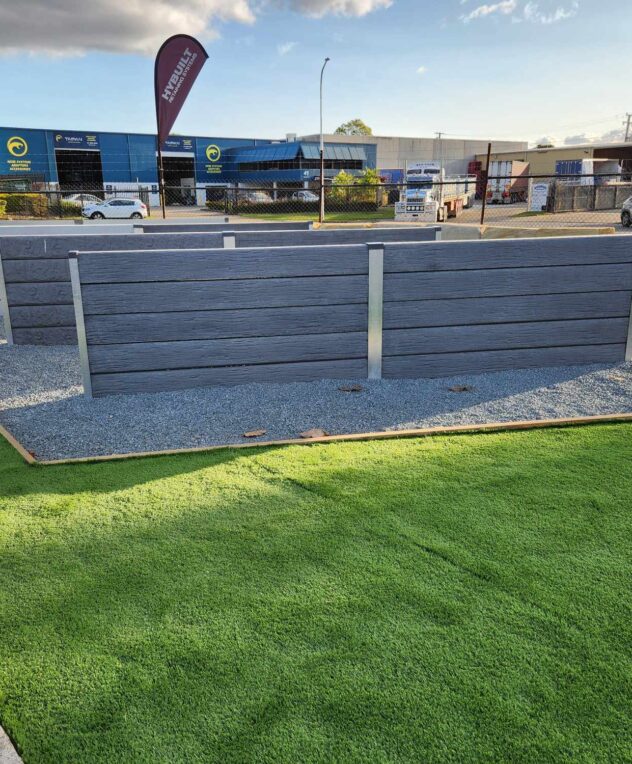
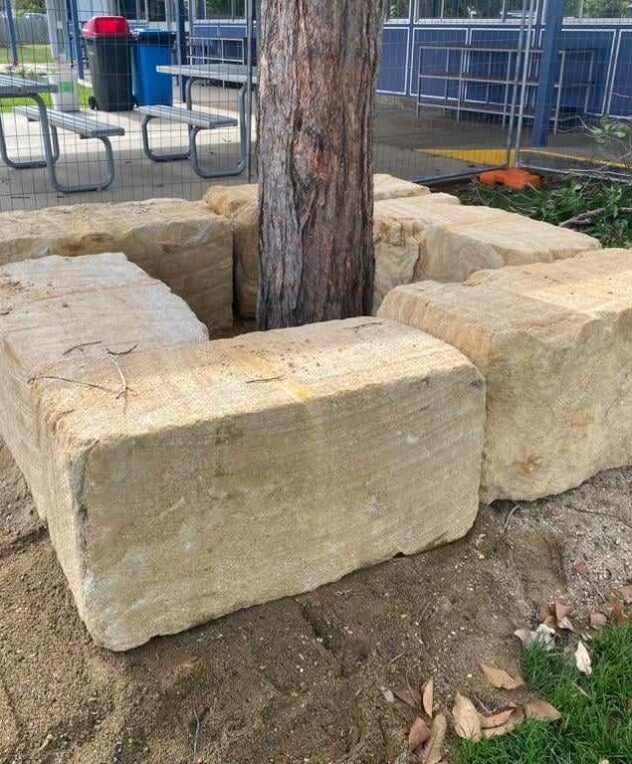
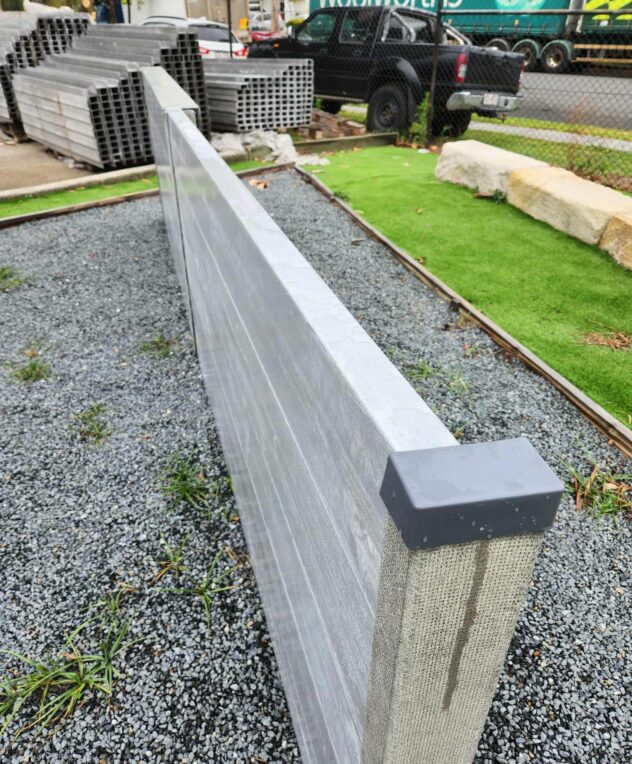
We provide the expertise you need to ensure your wall meets QLD standards. Our next-day delivery options mean your project won’t be sitting in limbo for weeks. We also offer premium composite and sandstone retaining systems that are built to last.
We aren’t just selling materials. We’re providing the peace of mind that your boundary dispute is solved for good with a high-quality, professional result.
Ready to get your retaining wall project moving with a team that stays on point? Contact HYBUILT today for expert advice and swift delivery.
 PRICE BEAT GUARANTEE! - T&C's Apply